
To reach the communities who need them most, sometimes fish have to fly.
For 30-plus years, the nonprofit SeaShare has distributed donated fish to food banks across the country, making it possible for millions of Americans experiencing hunger to add nutrient-rich seafood to their plates. With most of SeaShare’s donated fish sourced from the state of Alaska — and dozens of communities in remote corners of the state relying on the donations — the organization based in Juneau (JNU) and Seattle (SEA) often partners with Alaska Air Cargo to get fish to food banks, and families’ tables, fast.
“We have a grant that helps us supply Alaska communities, and a lot of these communities are small and can’t take a huge amount all at once,” said Hannah Lindoff, SeaShare’s executive director. “When you need to move, say, 1,000 pounds of fish, Alaska Air Cargo is so convenient and organized. I feel really secure because we’ve got a perishable product and the shipping is seamless.”
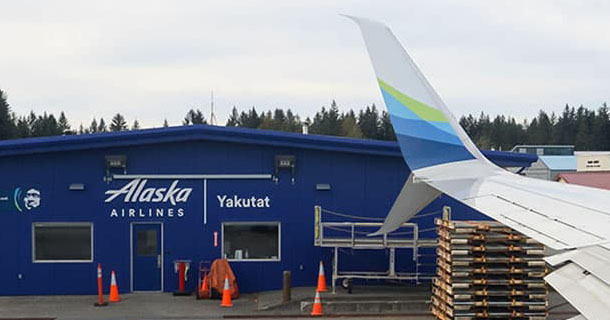
So far this year, SeaShare has distributed more than 1.5 million pounds of fish across the country and fed families in 50 communities across the state of Alaska. Alaska Air Cargo serves 20 of those communities, with our stations at Fairbanks (FAI), Kotzebue (OTZ) and Nome (OME) acting as hubs to distribute donations to smaller remote towns.

SeaShare’s fish donations come directly from the seafood industry working in these communities — cod, pollock and wild salmon fishermen and processors, for example — and our cargo teams often fly donated fish from its source.
“This summer Alaska Air Cargo flew about 15,000 pounds of salmon out of King Salmon (AKN) so that it could go to the lower Yukon River for distribution,” Lindoff said. Kodiak (ADQ) is another frequent source, bringing in far more fish than the local community can consume. This fall, SeaShare called on Alaska Air Cargo to fly surplus rockfish from Kodiak to Anchorage (ANC) to be distributed to military families near Joint Base Elmendorf-Richardson (JBER) through the Armed Services YMCA of Alaska.
And while SeaShare doesn’t have much of a presence in Hawai’i yet, Lindoff says the combination of Alaska and Hawaiian Air Cargo may create the opportunity for the nonprofit to have an impact there. “Hawai’i is another place that’s like Alaska where it’s a surplus seafood producer but has some of the same needs in remote communities,” she said.
“Seafood logistics are really complicated,” said Lindoff, who said she values Alaska Air Cargo’s decades of experience in shipping seafood, along with our caring service. “Everybody I meet from Alaska Air Cargo gives me their card and says, ‘We’re here to help. Let us know when you need something.’”
Lindoff is proud that SeaShare makes it possible for teams across the seafood industry to fulfill a deep need in their hometowns. “We’re just the conduit for this type of giving,” she said. “It’s our job to use seafood as a means of giving back to these communities, making sure people have enough to eat.”
About SeaShare
SeaShare is a nonprofit that helps the seafood industry donate to hunger-relief efforts across the United States. The biggest need for donations comes in the January-March months after the holidays, when food banks’ stores are depleted. How to donate
Alaska and Hawaiian Air Cargo: Connections to the world
Together, Alaska and Hawaiian Air Cargo reach 130-plus cargo destinations around the world — including nonstop service connecting our Seattle (SEA) and Honolulu (HNL) hubs with cities around Asia the South Pacific. Our seasonal service between Honolulu and Auckland, New Zealand (AKL) returns November 16.
With more than 90 years of experience carrying vital shipments to remote communities, our air cargo teams share deep connections to the places where we live, work and fly.
Join our email list to get the latest updates on new routes and shipping services.